GLOBAL CHOKEPOINT CRISIS: IRAN BLOCKADE, HORMUZ SEIZURES, AND THE GREAT ENERGY REROUTE OF 2026
⚡ 30-SECOND SUMMARY ⚡
- Hormuz Strait is under de facto blockade: IRGC-N seizures, MARAD advisories to ignore diversion orders, and US “globalising” containment are forcing ships into high-risk corridors.
- Panama Canal congestion intensifies as Suez‑bypass traffic collides with El Niño–driven water constraints – auction slot prices are surging, raising freight costs on both oceans.
- Financial missiles strike: OFAC targets 40 Iranian oil‑linked entities (including 19 tankers), freezing $344M in crypto and hitting China’s Hengli refinery, tightening trade finance liquidity by up to 20%.
- Energy & freight indexes spike: Brent crude stays above $100; SCFI/BDI projected to leap 15–30%; war‑risk insurance premiums are pushing voyage costs to levels unseen since 2024’s MSC Aries seizure.
- Imperative: Supply‑chain leaders must immediately stress‑test alternative routings, secure war‑risk cover, and build 20% liquidity buffers in correspondent banking.
STAGE 1: WHAT HAPPENED?
Maritime theatre:
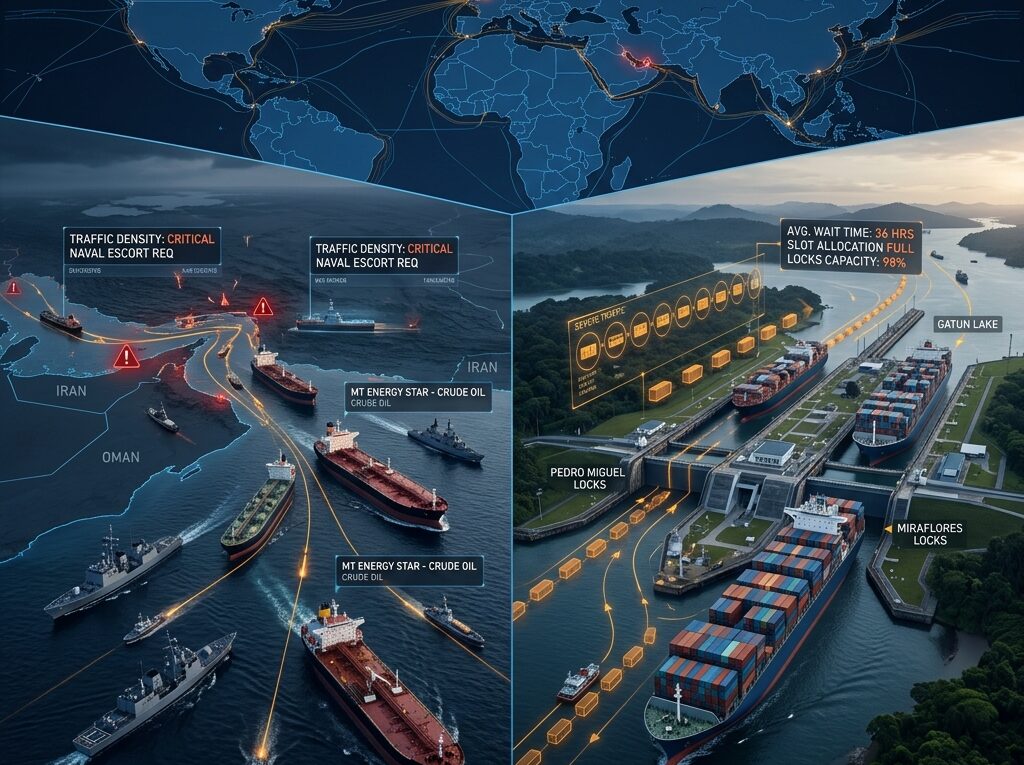
- Hormuz / Persian Gulf: IRGC‑N seized Epaminondas and MSC Francesca (MarineTraffic shows vessels now at Iranian anchorages). UKMTO reports a tanker explosion near Kuwait, a bulk carrier hit off Oman, and projectiles striking a container vessel south of Kish Island.
- Red Sea: MARAD Advisory 2026‑006 urges ships to disable AIS transponders to avoid Houthi targeting – a dangerous operational step that complicates collision avoidance and underwriting.
- Panama Canal: Auction slot prices surge as lines pay premiums to jump queues; officials issue “no congestion” statements, yet carriers face rerouting congestion driven by Suez avoidance and El Niño water‑level risks. CK Hutchison launches arbitration against Maersk over port rights, adding contractual uncertainty.
Financial / sanctions front:
- OFAC package targets 40 entities linked to Iran’s petroleum trade – 19 specific tankers, ship‑management companies, and crypto wallets – freezing $344M in digital assets. Hengli Petrochemical (Dalian), a major refiner of Iranian crude, is designated, cutting off a critical revenue channel.
- MARAD issues Hormuz Security Advisory ordering U.S.‑flagged vessels to ignore diversion commands (likely linked to GPS/GNSS spoofing – MARAD 2026‑004).
- U.S. DOT announces $488M port infrastructure push, while Maritime Administrator Carmel warns the entire maritime system needs rebuilding.
Energy & macro signals:
- Canada approves Enbridge’s $4B Sunrise gas expansion; Japan’s Japex plans to quadruple hydrocarbon output with U.S. expansion; SLB and Baker Hughes forecast higher exploration spending as the Iran war disrupts supply.
- Amazon‑backed nuclear developer X‑energy debuts with a $11.9B valuation, reflecting the AI‑driven electricity demand boom, even as green energy indices show a narrow, fragile rally.
- Wall Street appears to shrug off the energy shock, but CDS markets are pricing 50–100 bps jumps for exposed entities and 20–45 bps for regional sovereigns.
STAGE 2: WHY?
A tri‑chokepoint squeeze is rewriting global trade:
- Hormuz becomes a gunpoint gate: Iran’s de facto control escalates—ship seizures, spoofed diversion orders, and asymmetric attacks push insurance underwriters to impose war‑risk premiums comparable to the MSC Aries incident (April 2024). This is not sporadic piracy; it’s a state‑sponsored denial‑of‑passage operation.
- Panama faces demand‑shock congestion: With the Suez route still threatened by Red Sea instability, traffic rerouted around the Cape is taxing Panama’s capacity. Auction slot prices climb as the canal auctions scarce transit windows, while El Niño threatens to reduce water levels – but officials’ “no congestion” message masks the cost surge.
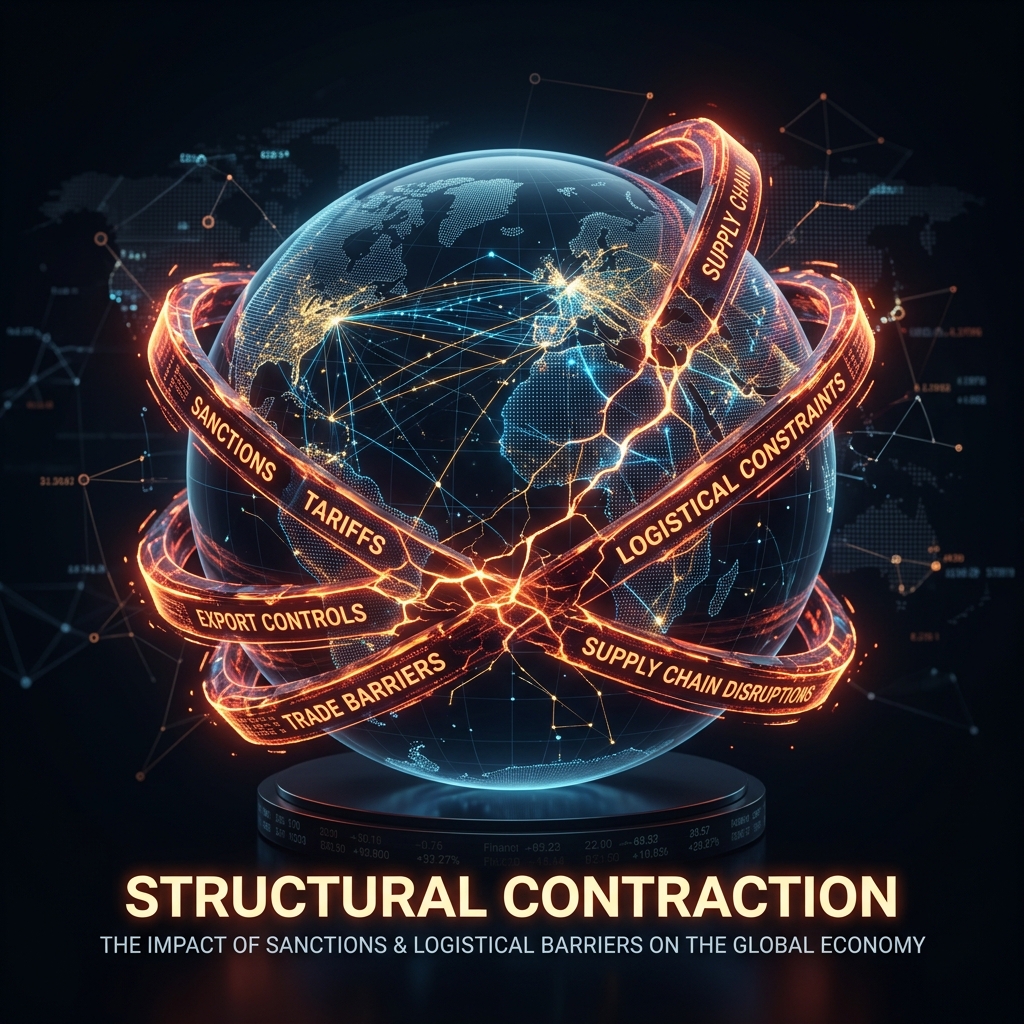
- Financial strangulation feeds liquidity drain: OFAC’s sweeping sanctions on Iranian oil intermediaries, including China’s Hengli, instantaneously tighten trade finance. Correspondent banks demand 20% buffers, shrinking the credit pool for commodity traders and mid‑tier shipping lines. CDS spreads widen, signalling systemic risk transfer from physical to financial markets.
The EU’s scramble for Canadian LNG, Russia’s Yamal condensate under fresh sanctions, and the U.S. “globalising” the Iran embargo further fracture energy flows, making spot chartering a daily gamble.
STAGE 3: WHAT TO DO?
- Immediate routing reconfiguration: Model both Cape‑of‑Good‑Hope and trans‑Pacific/Atlantic alternatives. For time‑sensitive cargo, accept Panama’s auction premium as a predictable cost rather than last‑minute jockeying.
- War‑risk insurance & compliance heartbeat: Engage P&I clubs early to lock in special cover for Gulf transits; ensure AIS policies align with MARAD 2026‑006 but do not violate SOLAS. For Hormuz, factor in GPS spoofing (MARAD 2026‑004) backup – revert to celestial/INS navigation where possible.
- Liquidity fortress: Build a minimum 20% buffer in trade‑finance lines; pre‑negotiate L/C confirmation with banks less exposed to OFAC secondary sanctions.
- Energy procurement: Lock in LNG and crude term contracts now; the 2026 energy price floor appears solid above $90/bbl, and sudden spikes will hit spot buyers hardest.
- Portfolio hedging: Use CDS to hedge exposure to sovereigns and companies heavily linked to the Suez/Panama chokepoints; consider freight‑derivative positions on SCFI/BDI.
STAGE 4: FORESIGHT
Scenario A – Base Case (65% probability): “Chronic Friction”
- Hormuz remains semi‑blocked: convoys with naval escort become norm but slow passage, adding 15‑20 days lead time to Gulf‑to‑Europe voyages.
- Panama sustains elevated auction prices; average transit cost stays 40% above pre‑2025 levels.
- Oil oscillates $100‑115/bbl; SCFI/BDI rise 20% with seasonal spikes. CDS spreads settle at +65 bps for target names.
- Action: Multi‑modal supply chains and strategic regional inventories become essential.
Scenario B – High Tension (25% probability): “Straight of Stress”
- Iran blocks Hormuz entirely for 48‑72h after a major naval incident; oil breaches $140/bbl before partial resumption.
- Panama auctions hit record $4M per slot as desperate carriers bid; some vessels turn back to Cape.
- Trade finance freezes for all Iran‑adjacent transactions; several mid‑size shipping lines face liquidity collapse.
- Action: Emergency air‑freight for mission‑critical components; government‑level intervention on fuel price caps.
Scenario C – Tail Risk (10% probability): “Dual Chokepoint Crippled”
- Coordinated Houthi‑Iranian escalation shuts both Red Sea and Hormuz for >2 weeks.
- Panama Canal suffers simultaneous water‑level crisis, reducing daily transits by 30%.
- Global shipping capacity effectively fragmented; container rates double, food/energy shortages emerge in East Africa and South Asia.
- Action: Activate crisis management cells; invoke force majeure; reposition floating storage.

STAGE 5: TECHNICAL DATA
📊 SCFI (Shanghai Containerized Freight Index)
- Value/Projection: +15‑30% month‑on‑month
- Causal Mechanism: Hormuz threat premium, Panama auction costs, and Suez‑bypass congestion feeding into spot rates
- Status: 🔴 Critical
📊 BDI (Baltic Dry Index)
- Value/Projection: +20‑30%
- Causal Mechanism: Bulk carrier attack off Oman, war‑risk rerouting extending ton‑mile demand
- Status: 🔴 Critical
📊 Brent Crude Oil (Front‑Month)
- Value/Projection: $100‑115/bbl (Base Case); $140+ (High Tension)
- Causal Mechanism: Iran supply disruption, EU scramble for alternatives, SLB/Baker Hughes signalling exploration spend boost
- Status: 🔴 Critical
📊 War‑Risk Insurance Premium (Hormuz transits)
- Value/Projection: 0.5‑1.2% of hull value (up from 0.1%)
- Causal Mechanism: IRGC‑N seizures, MARAD 2026‑004 GPS spoofing advisory, MSC Aries precedent
- Status: 🔴 Critical
📊 CDS Spreads (Target Entities/Sovereigns)
- Value/Projection: +50‑100 bps (entities); +20‑45 bps (regional sovereigns)
- Causal Mechanism: OFAC shadow‑fleet sanctions, trade‑finance liquidity drain, heightened default risk for oil‑dependent issuers
- Status: ⚠️ Medium
📊 Panama Canal Auction Slot Price
- Value/Projection: $1.8‑2.5M per Neo‑Panamax transit (from ~$500K baseline)
- Causal Mechanism: Demand‑shock congestion from Suez avoidance, CK Hutchison arbitration uncertainty, official denials masking real bid‑up
- Status: 🔴 Critical
📊 Trade Finance Liquidity Buffer (Correspondent Banking)
- Value/Projection: Immediate 20% collateral requirement increase
- Causal Mechanism: OFAC sanctions on Hengli and tanker network causing banks to de‑risk, shrinking uncommitted lines
- Status: ⚠️ Medium
📊 Nuclear Energy Equity Valuations (X‑energy / sector)
- Value/Projection: +27% on debut; broader green index +40% but rally narrow
- Causal Mechanism: AI‑driven electricity demand, supportive policy for carbon‑free baseload, despite overall sector fragility
- Status: ✅ Low (for financial stability, but notable for energy transition)
📊 AIS Disablement Compliance Risk (Red Sea – MARAD 2026‑006)
- Value/Projection: High collision / SOLAS non‑compliance risk
- Causal Mechanism: U.S. advisory urging AIS switch‑off to avoid Houthi targeting; conflicts with IMO transparency rules
- Status: 🔴 Critical
📊 GPS/GNSS Interference Index (Hormuz – MARAD 2026‑004)
- Value/Projection: Sporadic spoofing verified; vessels ordered to ignore external diversion commands
- Causal Mechanism: State‑sponsored electronic warfare, consistent with Hormuz escalation pattern
- Status: 🔴 Critical
🚩 Disclaimer: This RadarCell analysis is based on OSINT and probability‑based scenario planning. Strategic decisions should be made within a framework of multi‑source verification and internal risk appetite.