
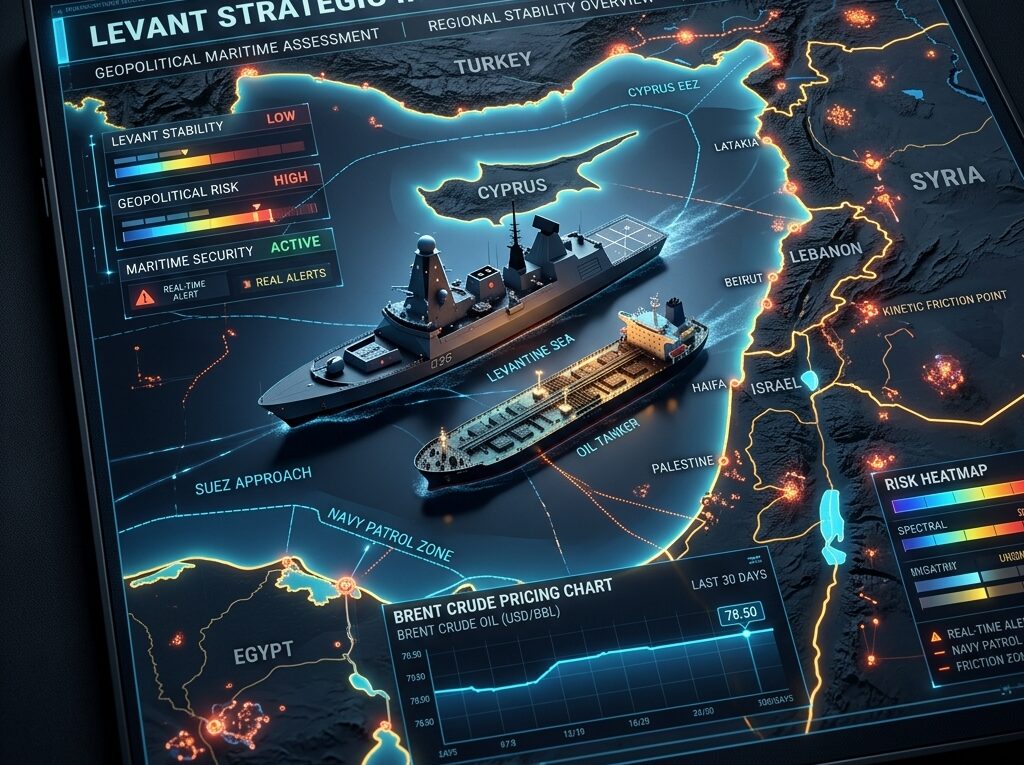
Levant Kinetic Friction: Maritime Security Architecture and Overlapping Operations
Strategic Shift
During the first week of May 2026, the Levant strategic area and the Eastern Mediterranean axis witnessed three independent yet concurrent high-kinetic developments. Israel’s first airstrike on Beirut since the ceasefire, the United States’ interception of two Iranian-flagged tankers, and the deployment of the UK’s HMS Dragon to Cyprus collectively elevate the risk profile within the regional maritime security architecture.
While there is no documented operational coordination among the involved actors, the concurrency of these physical deployments generates structural friction for global maritime routes. Interestingly, energy market risk pricing has not yet absorbed this operational density. Brent crude is currently trading at $101.29, remaining below its 30-day baseline average. This divergence indicates that markets are interpreting these events as isolated tactical engagements and boundary-testing by the involved parties, rather than precursors to a broader, systemic regional escalation.
The Bottom Line
Despite increasing military density and overlapping deployments in the Levant operational space, diplomatic channels remain active. Although physical movements coincide, there is no verifiable evidence of a coordinated strategic axis or allied offensive. Corporate leadership and supply chain architects should view the current pricing stability in energy markets not as an absence of risk, but as a critical strategic window to reinforce alternative routing, hedge energy exposure, and finalize contingency maritime frameworks.